Programming Languages Lab
Department of Computer Science and Technology
School of Electronics Engineering and Computer Science
Peking University
E-mail: xin AT pku.edu.cn
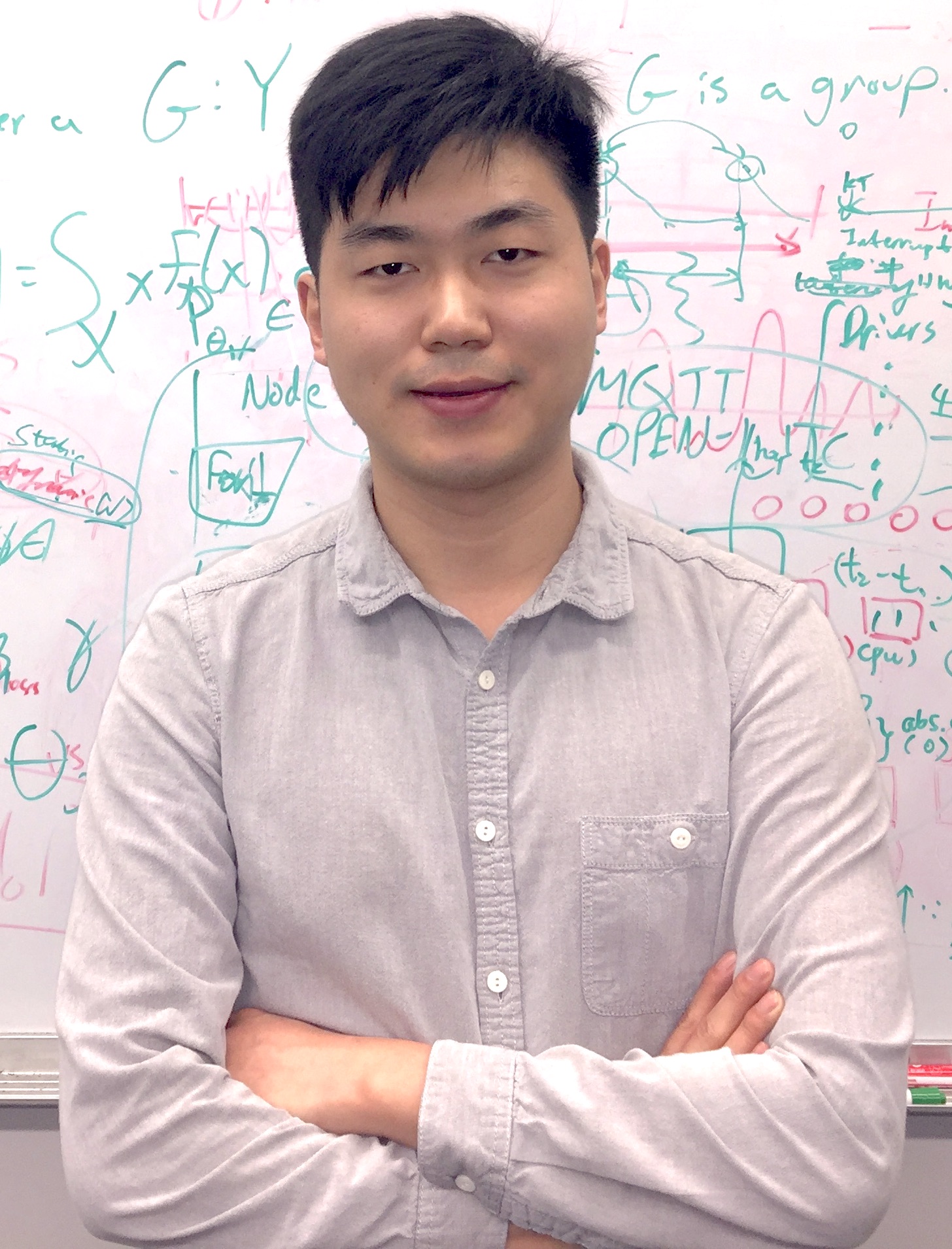
Hello, I am Xin Zhang (pronunciation ≈ "shin chang"), an assistant professor at Peking University. Before joining Peking, I was a postdoctoral associate at MIT CSAIL working with Prof. Armando Solar-Lezama. I received my Ph.D. from Georgia Tech under the supervision of Prof. Mayur Naik. I am broadly interested in topics related to programming languages and software engineering.
Over the past five years, my main research focus has been a new paradigm of program analysis that incorporates probabilistic reasoning into conventional abstract-interpretation-based program analysis. This paradigm, named Bayesian Program Analysis, enables program analyses to quantify results confidence and learn from external information. Around this paradigm, I have built applications in program analysis [OOPSLA'25a, OOPSLA'26b], fuzzing [POPL'26a], and fault localization [TSE'25,ICSE'22], developed algorithms for abstraction selection [OOPSLA'24a, OOPSLA'25b], question selection [OOPSLA'26a], and efficient inference [ASE'25, ASE'26], and theories for abstract interpretation with confidence [PLDI'26]. My other research interests include optimizing domain-specific languages for program synthesis [POPL'26b], artificial intelligence explainability [AAAI'25, ACL'26, ICML'26,IJCAI'26], autoformalization with LLMs [TOPLAS'26], and abstraction selection for traditional program analyses [SAS'21, OOPSLA'24b]. For details, please see Research.
Students
- Zhenyu Yan (Sep 2021 - ) [OOPSLA'24b] [OOPSLA'26a][TOPLAS'26][ACL'26][IJCAI'26]
- Yiqian Wu (Sep 2021 - , co-advised with Lu Zhang and Yingfei Xiong) [ICSE'22] [ISSRE'23] [TSE'25] [ASE'25]
- Junhao Liu (Sep 2022 - ) [AAAI'25][TOPLAS'26][ACL'26][ICML'26][IJCAI'26]
- Yuanfeng Shi (Sep 2022 - ) [OOPSLA'24a][OOPSLA'25b][PLDI'26][OOPSLA'26b]
- Tianchi Li (Sep 2023 - ) [OOPSLA'25a][TOPLAS'26]
- Yifan Zhang (Sep 2023 - ) [OOPSLA'24a][OOPSLA'25b][POPL'26a][OOPSLA'26b]
- Haonan Yu (Sep 2024 - ) [ACL'26][ICML'26][IJCAI'26]
- Haoran Lin (Sep 2024 - ) [OOPSLA'26a][OOPSLA'26b]
- Haoyu Feng (Sep 2025 - ) [ASE'26]
- Zhiyi Li
- Ziyue Jin [PLDI'26]
Teaching
- Advanced Probabilities and Statistics (Spring 2026)
- Introduction to Discrete Mathematics (Fall 2025)